
Need SEO help? Book a 1:1 call

You’re writing about the wrong things. Most people with 50+ blog posts and zero traffic are answering questions nobody’s asking, targeting impossible keywords, or creating content Google doesn’t want to rank. The problem isn’t your writing quality, it’s that you’re playing a game you don’t understand yet.
I’ve been there. Early in my SEO career, I watched clients publish 30-40 posts with crickets. Then we’d fix the strategy and traffic would jump 450% in five months.
The good news? This is fixable. You just need to stop doing what isn’t working.
Are You Writing About Topics People Actually Search For?
This is the #1 killer of blog traffic. You’re writing what you find interesting instead of what people are actually typing into Google.
I see this constantly. Someone launches a photography business and writes posts like “My Journey to Becoming a Photographer” or “Why I Love My Camera.” Great stories. Zero search volume.
Nobody wakes up and searches “photographer’s journey.” They search “how to book a wedding photographer in Denver” or “family photo session pricing.”
Here’s how to fix this:
Open Google Search Console (it’s free). Go to the Performance tab. Look at which queries you’re already getting impressions for, even if you’re not getting clicks yet. Those are real searches happening right now.
Use free tools like AnswerThePublic or Google’s “People Also Ask” section. Type in your main topic and see what actual questions people have.
Check keyword difficulty before you write. A brand new site can’t compete for “best coffee maker”, that’s dominated by Wirecutter and Consumer Reports. But you might rank for “best single-serve coffee maker for dorm rooms.”
If you’ve written 50 posts about topics with zero search demand, you’ve essentially published 50 posts into a void.
Is Your Content Answering the Wrong Question?
This is called search intent mismatch and it’s deadly.
Let’s say you write “How to Train Your Dog” and create a beautiful 3,000-word guide. You’re targeting people searching “dog training near me.”
You won’t rank. Why? Because “dog training near me” has commercial intent, people want to hire a trainer, not read a DIY guide. Google will show local businesses, not blog posts.
Here’s how search intent works:
- Informational: “How does dog training work?” → Blog posts, guides, videos
- Commercial: “Best dog training services Austin” → Comparison pages, reviews
- Transactional: “Dog training near me” → Local business listings, booking pages
- Navigational: “PetSmart dog training” → That specific business website
I helped a client scale from 300 to 14,000 monthly visitors in 16 months by fixing this exact problem. We stopped targeting buyer keywords with blog content and started targeting researcher keywords. Traffic exploded.
Before you write anything, Google your target keyword. Look at what’s actually ranking. If the top 10 results are all product pages and you’re writing a blog post? You’re wasting your time.
Are You Targeting Keywords You Can’t Win?
Every new site makes this mistake. They target massive, competitive keywords and wonder why they’re stuck on page 12.
Your brand-new blog with zero backlinks cannot outrank websites that have been building authority for 10 years. It’s not happening. You need to be strategic.
I worked with TokyoCarZ and we indexed 7,500+ keywords by focusing on long-tail, low-competition terms first. We didn’t try to rank for “used cars Japan.” We targeted specific models and questions like “import process Nissan Skyline R34 to USA.”
Built authority. Then scaled up.
Here’s what to do:
Target keywords with a difficulty score under 30 (use Ahrefs, Semrush, or Ubersuggest’s free version). Look for search volume between 50-500 per month, these are your sweet spot. Focus on long-tail questions: “how to fix slow WordPress site speed” beats “WordPress speed.”
Win 20 small battles before you fight the war. Once you’re ranking for easier terms, Google starts trusting you for harder ones.
How Long Has It Actually Been?
SEO isn’t instant. If you published 50 posts in the last month and you’re expecting traffic already, you need to adjust your expectations.
Google takes 4-6 months minimum to trust new content. For competitive niches, it’s 8-12 months.
I’ve seen this timeline play out dozens of times:
- Months 1-2: Almost nothing happens
- Months 3-4: A few posts start appearing on page 3-5
- Months 5-6: Traffic starts trickling in (10-50 visitors/day)
- Months 8-12: Real growth kicks in (200-500+ visitors/day)
One of my clients was ready to quit after 3 months of publishing. I convinced them to stick with it. By month 7, they were getting 5,000 monthly visitors and making $30K in sales.
If you’ve been publishing for less than 6 months, you might just need more patience. But if it’s been 12+ months with zero traction? You have a strategy problem.
What If You Published 100 Posts in a Week? I Tested It.
Here’s a wild case study that proves volume matters, but only when combined with smart strategy.
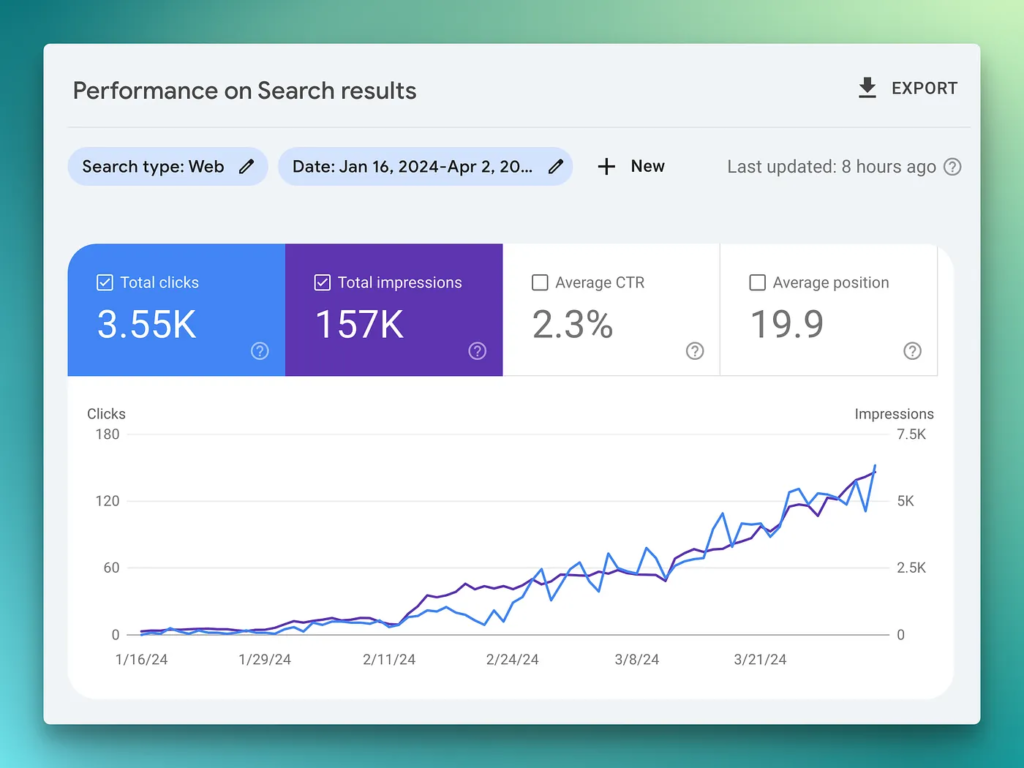
I ran an experiment with an eCommerce client who was frustrated with slow SEO progress. Instead of the usual “publish 4 posts per month” approach, we did something crazy: we published 100 high-quality blog posts in a single week.
Not random posts. Strategic posts targeting low-competition keywords with clear search intent.
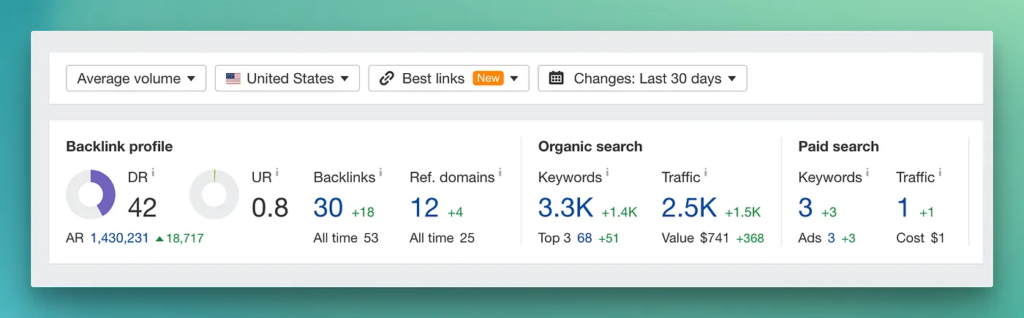
The results after 3 months:
- 157K monthly impressions (up from nearly zero)
- 3.5K organic clicks
- 3.3K keywords indexed
- 266 keywords ranking on page 1
- 68 keywords in the top 3 positions
- 18 featured snippets secured
And we did this without a single backlink.
Here’s what made it work:
- Smart keyword targeting: We didn’t chase competitive terms. We found 100 low-difficulty keywords with real search volume that matched different stages of the buyer journey.
- Quality at scale: Each post was properly researched, outlined, and written to actually answer the question. We didn’t sacrifice quality for speed.
- Google noticed the momentum: Publishing that much quality content at once seemed to signal to Google that this site was active and authoritative.
Now, I’m not saying everyone should publish 100 posts in a week. That takes serious resources and planning. But it proves that volume + strategy beats slow publishing with no direction.
If you’ve published 50 posts over 12 months with zero results, you didn’t have a volume problem, you had a strategy problem.
Is Your Website Even Indexable?
Sometimes the problem isn’t your content, it’s that Google can’t even see it.
Go to Google and type: site:yourwebsite.com
How many pages show up? If you’ve published 50 posts but only 10 are indexed, you’ve got a technical problem.
Common indexing killers:
- Your robots.txt file is blocking Google
- You accidentally set posts to “noindex”
- Your site is so slow Google gives up crawling it
- You’re on a terrible hosting provider that goes down constantly
Check Google Search Console under “Coverage” or “Pages.” It’ll tell you exactly which pages aren’t indexed and why.
I once audited a site with 80 blog posts that was getting zero traffic. Turns out their developer had accidentally left a “noindex” tag on the entire blog section. Fixed it in 5 minutes. Traffic started coming in 2 weeks later.
Do You Have Any Backlinks At All?
Content is king. But backlinks are the kingdom.
You can write the best blog post in your niche, but if you have zero backlinks and your competitors have 50, they’ll outrank you every time.
I increased one client’s domain rating from 11 to 23 by securing 160 quality backlinks. Their keywords jumped from 1,600 to 5,166. Traffic increased by 5K monthly visitors.
You don’t need thousands of backlinks. You need a few quality ones.
Ways to get backlinks without being spammy:
- Write guest posts for relevant blogs in your industry
- Get featured in local news or industry publications
- Create something actually link-worthy (original research, data, tools)
- Reach out to sites that link to similar content and pitch yours
One good backlink from a DR 40+ site is worth more than 100 directory submissions. Focus on quality.
Are You Actually Helping People or Just Writing Fluff?
Google’s gotten smart. It doesn’t just count keywords anymore, it evaluates if your content actually solves the problem.
If people land on your post and immediately bounce back to Google, that’s a signal your content sucks. Google notices. Your rankings drop.
I’ve recovered penalized sites and scaled niche projects by 4,580% in 5 months. The secret? Content that actually answers the question completely.
Ask yourself:
- Would someone read this and have their question fully answered?
- Or would they need to Google more stuff after reading?
If they need to Google more, your content isn’t good enough yet.
Add examples. Add screenshots. Add step-by-step instructions. Make it so complete that they don’t need to look anywhere else.
Have You Told Google What Your Posts Are About?
On-page SEO matters. A lot.
You can’t just write a post and hope Google figures out what it’s about. You need to tell Google explicitly through:
- Title tags: Include your target keyword, keep it under 60 characters
- Meta descriptions: Write compelling 150-160 character summaries that make people click
- URL structure: Use short, keyword-rich URLs like /how-to-train-puppy not /blog-post-12345
- Header tags: Use H2 and H3 headings with your keyword variations
- Image alt text: Describe your images for Google (and accessibility)
I see people write great content and then use a title like “Blog Post #47” or a URL like yoursite.com/p=823. That’s SEO suicide.
Want to learn how to do this right? I’ve written a detailed guide on DIY SEO that walks you through exactly how to optimize your posts properly without getting overwhelmed.
Are All Your Posts Sitting Alone With No Internal Links?
Internal linking is one of the most underrated SEO tactics.
If you’ve got 50 blog posts that don’t link to each other, Google doesn’t understand how they’re connected. You’re making Google’s job harder.
When I scaled TokyoCarZ to 16K+ monthly visitors, internal linking was huge. We created topical clusters, groups of related posts all linking to each other.
Here’s how to do it:
Pick your 5 best posts (the ones with the most potential). Find 5-10 other posts on your site related to each one. Add 2-3 internal links from each related post pointing to your best posts. Use descriptive anchor text like “learn more about keyword research” not “click here.”
This passes authority between your posts and helps Google understand your site structure.
Think of your blog like a city. Internal links are the roads. If every building is isolated with no roads connecting them, nobody can navigate. Build the roads.
Is Your Site So Slow That People Leave Before It Loads?
If your site takes 5+ seconds to load, you’re bleeding traffic.
People don’t wait. Google knows this. Slow sites get ranked lower.
Use Google PageSpeed Insights (free) to check your speed. Aim for a score above 70 on mobile.
Quick wins for faster sites:
- Compress your images before uploading (use TinyPNG)
- Switch to better hosting if yours is cheap and slow
- Remove unnecessary plugins if you’re on WordPress
- Use a caching plugin like WP Rocket or W3 Total Cache
I’ve seen sites jump from page 5 to page 1 just by fixing site speed and mobile usability. It’s not sexy work, but it matters.
Are You Quitting Too Soon?
This is the real killer. Most people give up right before it works.
I managed a project that went from ~300 to 14,000+ monthly visitors. But the first 3 months? Almost nothing. If we’d quit then, we’d never have seen the results.
SEO compounds. Every post you publish builds authority. Every backlink you earn adds credibility. Every indexed keyword expands your reach.
But you need to publish consistently for 6-12 months minimum to see real results.
The bloggers who win aren’t smarter than you. They just didn’t quit.
The Bottom Line
If you’ve written 50 blog posts with no traffic, the problem isn’t that SEO doesn’t work, it’s that you’re doing SEO wrong.
You’re probably targeting the wrong keywords, writing for the wrong search intent, competing in impossible niches, or just not giving it enough time.
The good news? This is all fixable.
I’ve helped eCommerce sites scale to $70K/month in organic sales, recovered penalized domains to 21,000 monthly visitors, and boosted niche projects by 4,580% in traffic. The wins came from fixing exactly the mistakes I’ve outlined here.
